
MIami’s Art Deco History
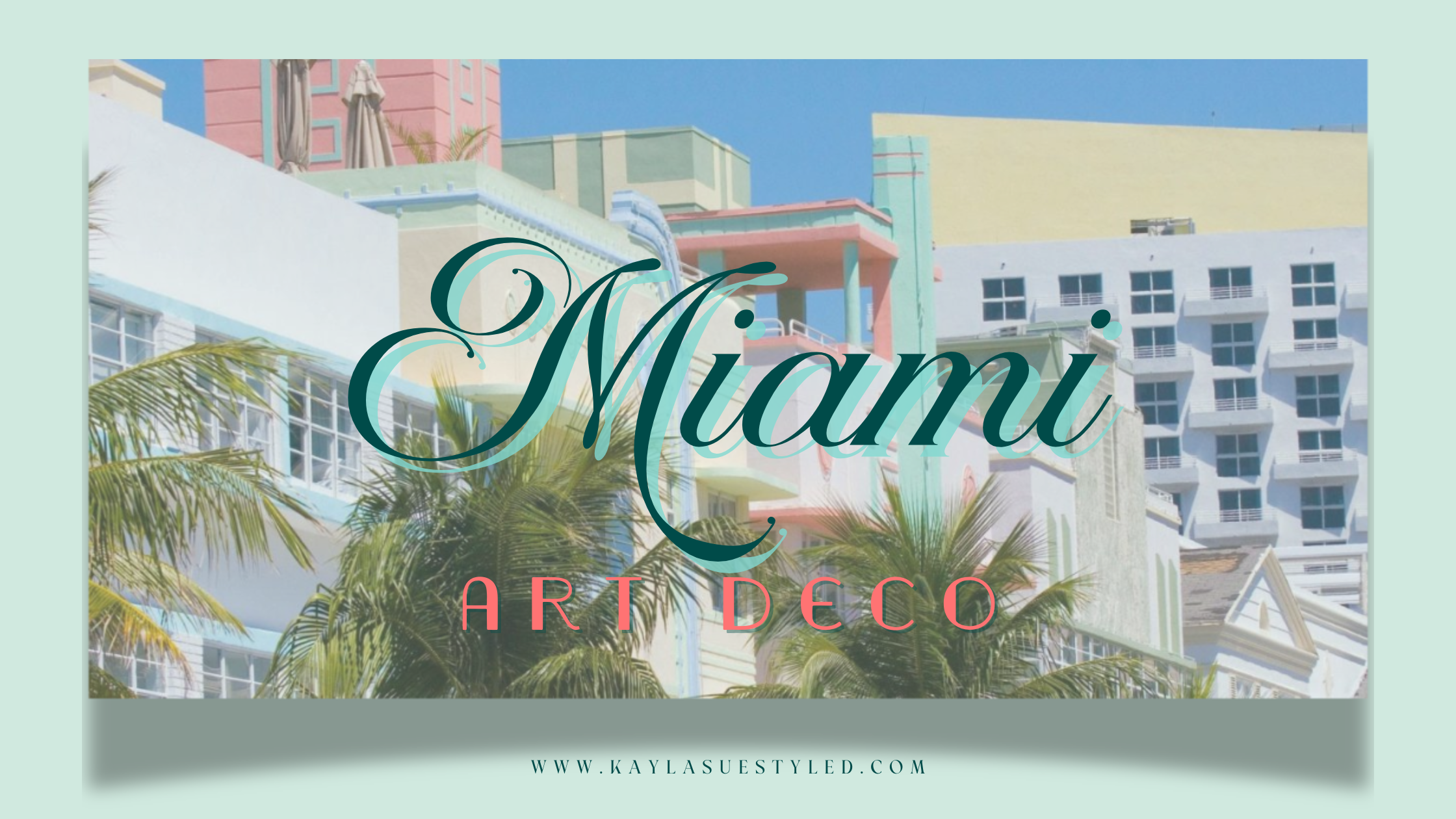
Art Deco, But Make It Miami
I’ve gone to Miami in the summer a couple times and while it is hot, it’s still wonderful. This past summer, I felt an urge to get away and booked a trip that I wanted to feel different from any I’d done before. I knew I wanted to show up as a true tourist this time. I’ve never really done a lot of the “typical tourist” stuff like tours, museums, etc. This trip was going to be all about learning the city. I wanted to understand Miami’s history, its architecture, and how the Art Deco district came to be. I left more inspired than ever.
In today’s post, I’m sharing what I learned and how it deepened my understanding of the design language that would later shape what I now call Miami Tropical Deco.
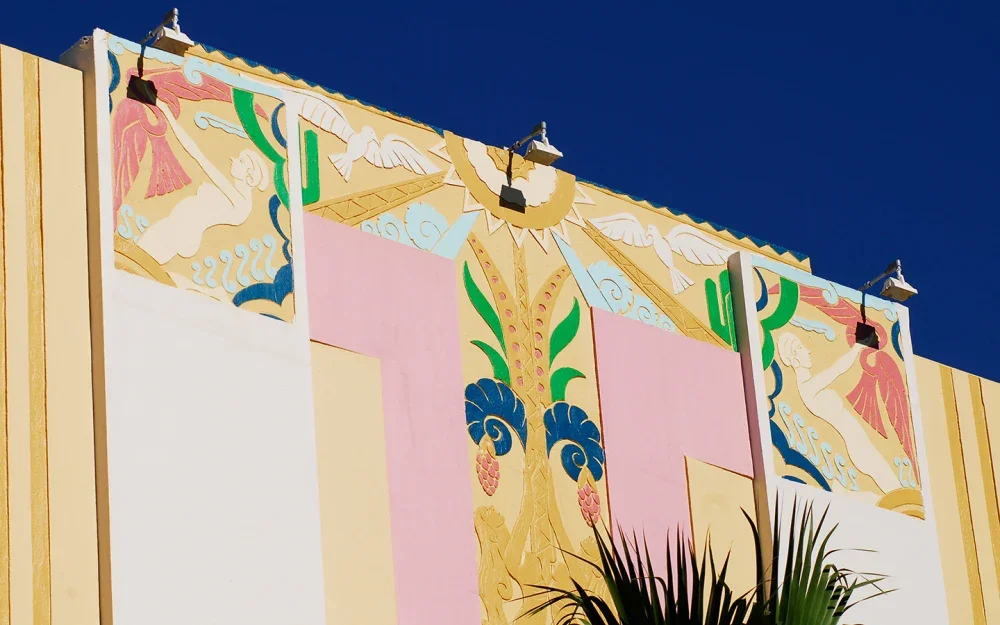
When you hear “Art Deco,” your mind may go straight to the dramatic, metallic glamour of the 1920s. You might envision Leo as Gatsby, raising his champagne glass in his mansion filled with black lacquer, chrome, gold, and geometric everything. But much of Miami’s Art Deco was much softer.
Before we talk about how Miami’s Art Deco district came to be, it’s important to know how Miami itself was created. Yes, you heard me. Created. From the start, Miami was essentially designed into being. Miami Beach was reshaped from a mangrove swamp and barrier island using dredged sand from Biscayne Bay, imported palm trees, and manmade dunes and beaches.
From day one, Miami Beach was built to feel like an exotic, sun-soaked escape. Soft, bright, and unmistakably vacation-coded.
That fact blew my mind when I first learned it, and honestly, it made sense as to why the city makes me feel the way it does. It’s never been a place I imagined myself living, even though I love it so much. To me, it has always just felt like vacation.
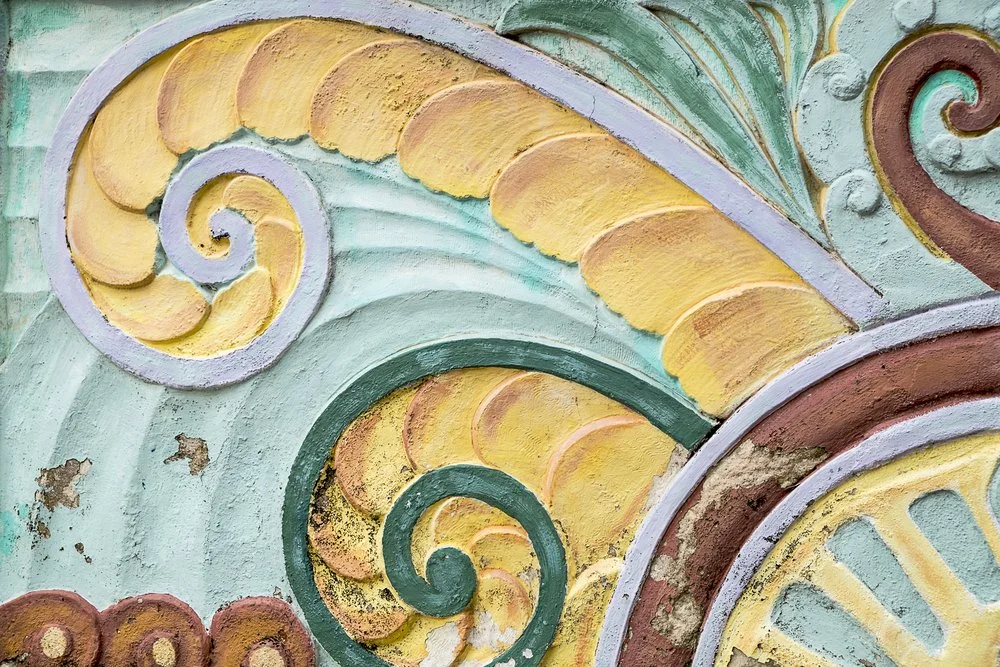
Between 1923-1943, 800 Art Deco buildings were built in a 1-mile square district in Miami, but these buildings didn’t copy New York design. Instead of going dark, metallic, and moody, Miami leaned into its environment filled with sunlight, sea breeze, palm trees, which gave Deco a softer, coastal makeover.
The dramatic, high-gloss Deco look did make an appearance later, during the 1980s and early 90s revival. This era brought black lacquer furniture, smoked glass tables, brass accents, and deep jewel tones into Miami’s interiors, especially in luxury condos and hotels. More on this later!
Gatsby Deco vs. Miami Deco: What’s the Difference?
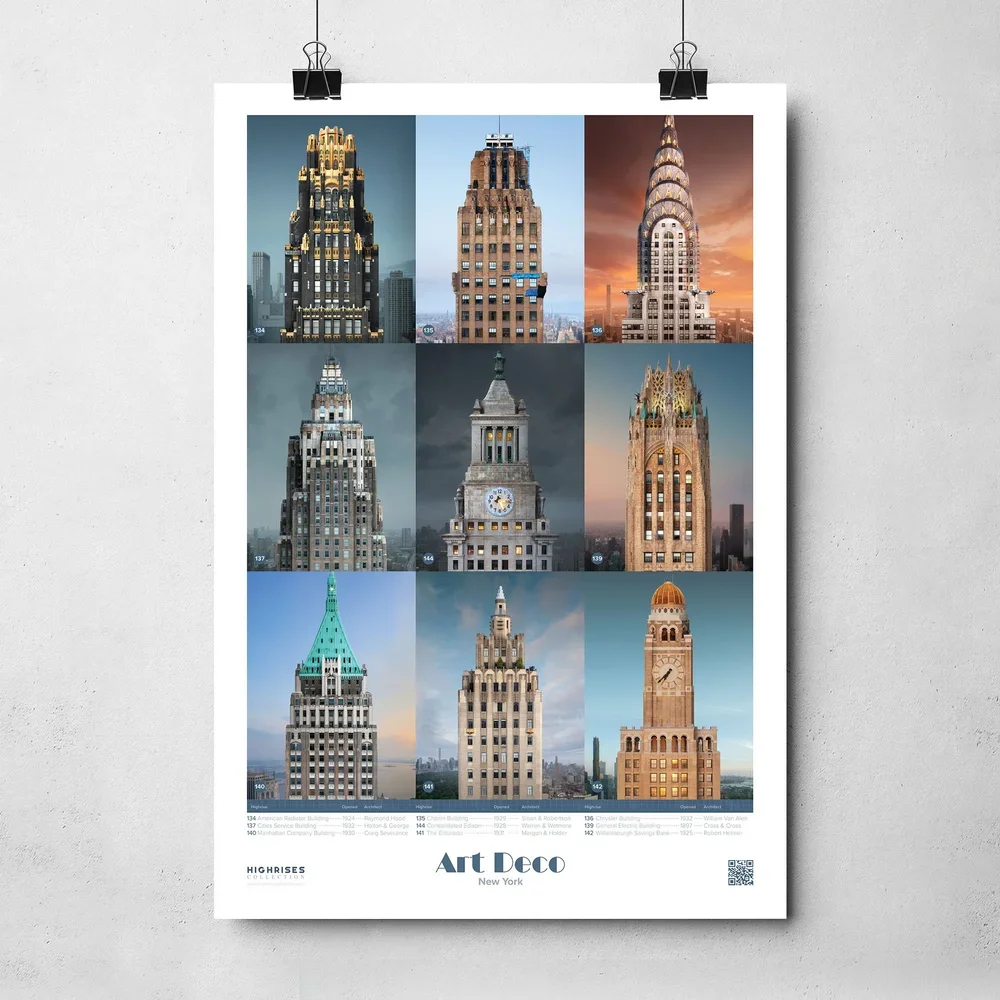
New York–Style Deco (Gatsby Deco):
Where New York Deco was sharp and theatrical, Miami Deco was playful, bright, and inspired by the sea.
Features:
metallic, chrome, and black
jewel tones and gold
skyscraper silhouettes
moody, industrial, theatrical
dramatic vertical lines
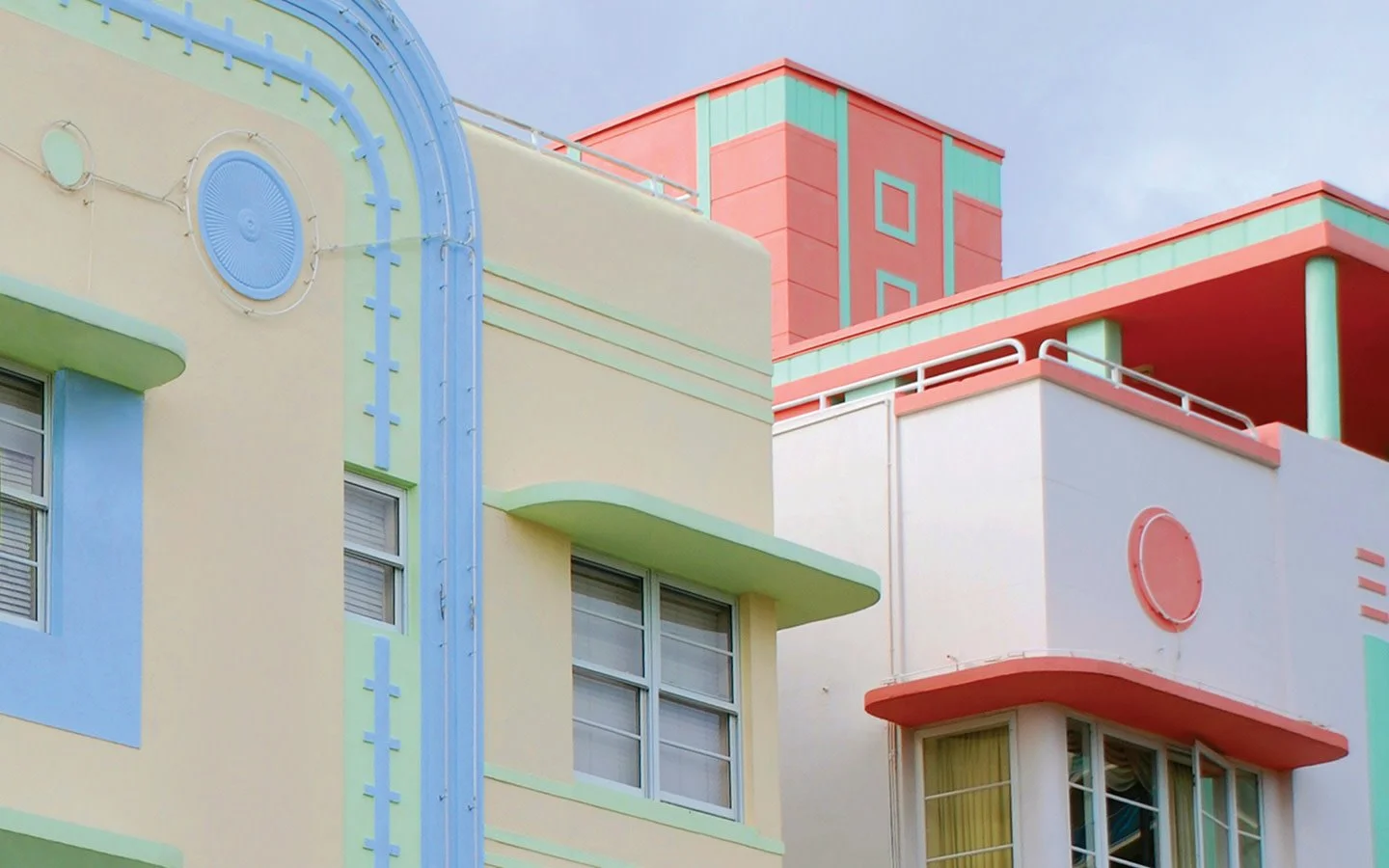
Miami Deco was softened by sunlight, humidity, lush palms and later, neon.
That softness is at the core of the Miami Tropical Deco aesthetic. It brings all the structure of Deco but balances it with color, airiness, and tropical ease.
Features:
curved corners
aerodynamic, nautical shapes
glass block windows
breeze block walls
tropical and marine motifs
light, beach-influenced tones
Key Features of Miami Art Deco Architecture
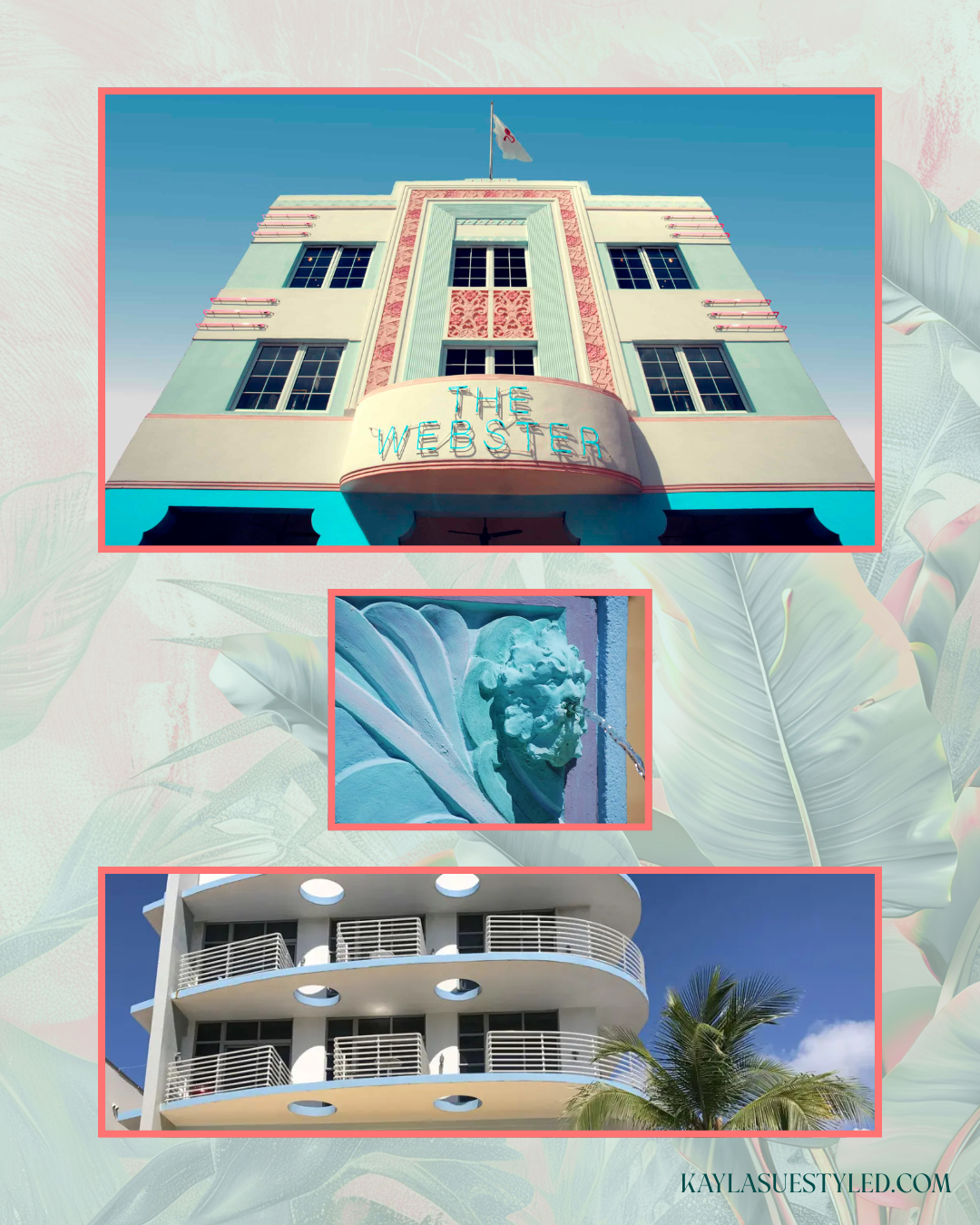
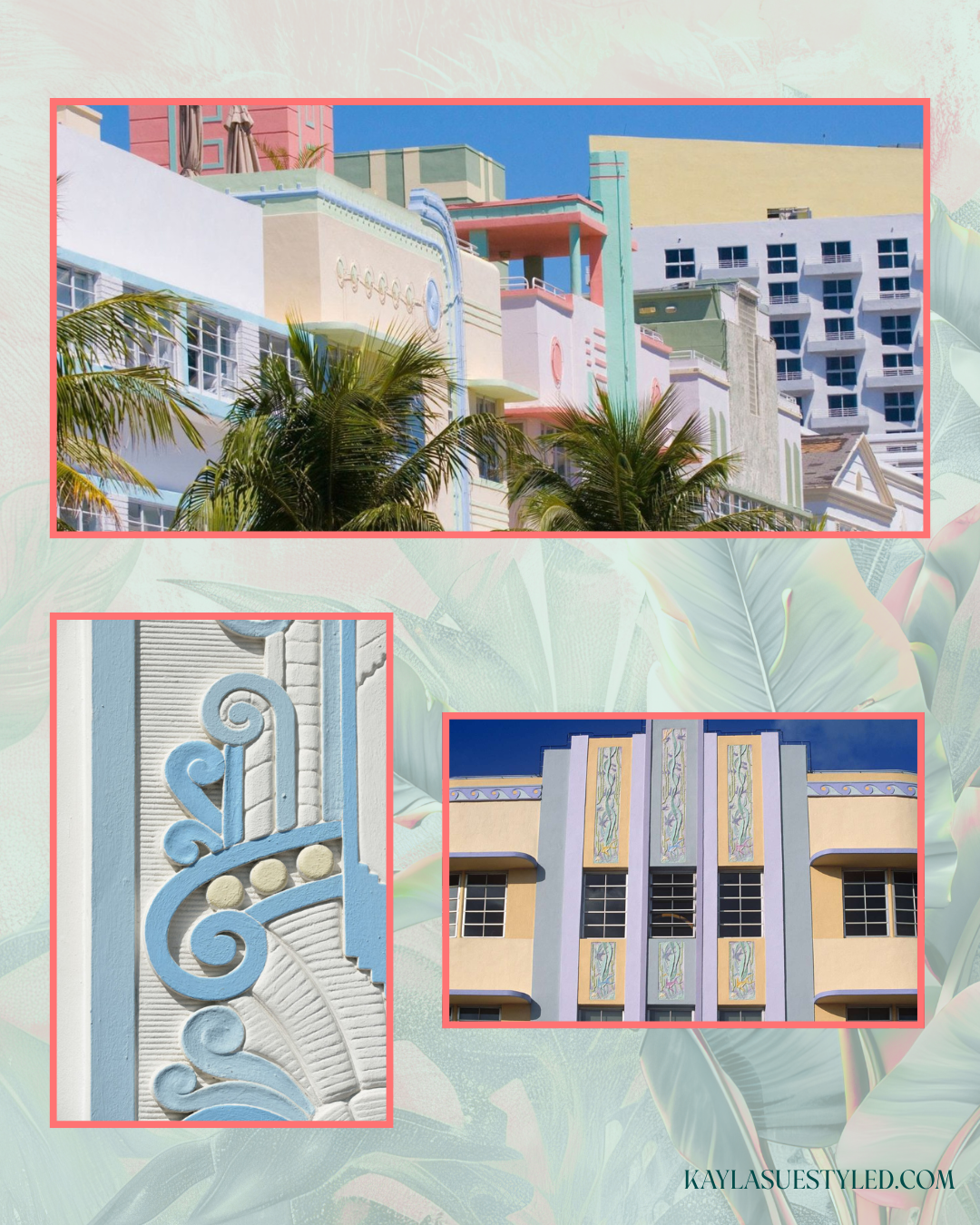
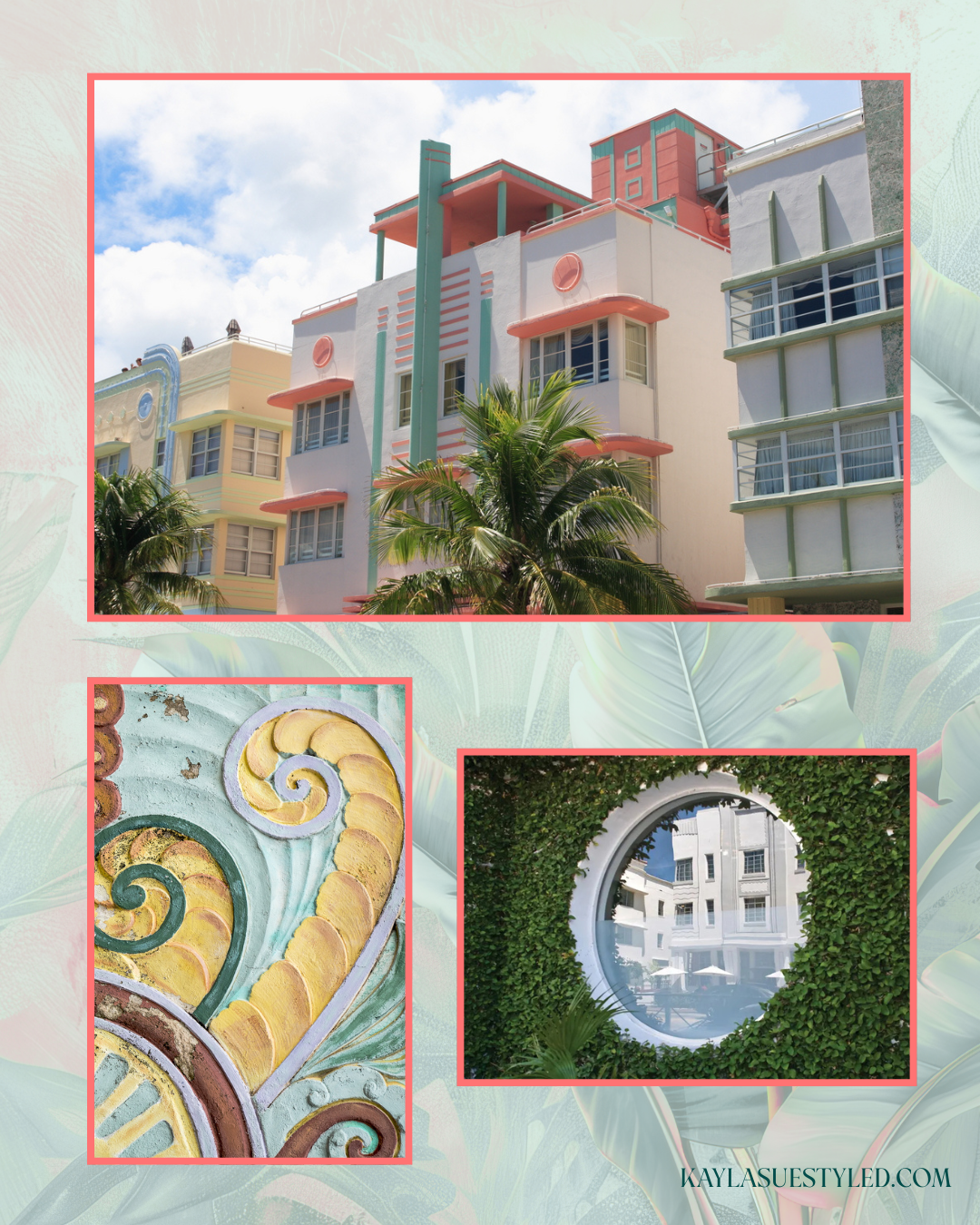
Once I started really started paying attention to the details while walking the Art Deco District and spending time with the Miami Design Preservation League, it became clear that Miami’s Art Deco isn’t defined by a single building. It’s defined by a visual language that repeats across hotels, apartments, and storefronts throughout the district. These architectural elements give Miami Deco its signature look and laid the foundation for what I now refer to as the Miami Tropical Deco aesthetic.
Decorative Concrete Blocks (Breeze Blocks)
Decorative concrete blocks, often called breeze blocks, appear throughout Miami Beach as walls, railings, screens, and fences. They weren’t just decorative, they served an important purpose. Designed for a hot, humid climate, they allowed light and air to move freely through buildings. Their geometric and floral-inspired patterns became one of the most recognizable features of Miami Art Deco and a perfect example of how the style balanced beauty with function.
Curved, Streamlined Forms
Miami Art Deco leans into rounded corners, smooth curves, and aerodynamic silhouettes inspired by ships, airplanes, and movement. Unlike the sharp, vertical Deco seen in cities like New York, Miami’s version feels softer, lighter, and more fluid. Nautical nods, like porthole-style windows, are a signature that reflects the city’s relationship with the sea.
Flat Roofs and Horizontal Lines
Flat roofs paired with projecting eaves emphasize horizontal movement and help shade buildings from the sun. Again, functional. This low, relaxed profile reinforces Miami’s identity as a resort destination rather than a dense urban center.
Glass Block and Light
Glass block became a defining material, used in stairwells, windows, and even entire walls. It filters natural light into interiors while maintaining privacy. At night, especially when paired with neon, these glass blocks glow softly and play a major role in shaping Ocean Drive’s iconic look.
Tropical and Nautical Motifs
Rather than industrial themes, Miami Art Deco draws inspiration directly from its surroundings. Palm fronds, shells, waves, sunbursts, and nautical motifs appear in railings and decorative panels, creating the Deco glamour on the beach and ocean that defines the city.
The Pastel Revolution & The People Who Saved Miami Deco
It was about 8PM when I got in my Uber in Miami this summer to head to my hotel. Every time I visit Miami, I’ve tried to stay in different areas. I’ve stayed in Brickell, Hialeah, Mid-Beach, and North Beach, but this was my first time staying directly in South Beach. I knew I wanted to spend a couple nights in an Art Deco hotel, so after finding a great deal, I booked The Starlite.
I go to Ocean Drive every time I’m in Miami, but staying on Ocean Drive, is another experience in itself. Stepping out the front door of my hotel and directly onto Ocean Drive, in all its neon energy, felt like being dropped into the set of a movie. I spent the evening exploring the drive, people watching, and just smiling like a dork non-stop.
The next morning, I walked around to find breakfast before my first touristy activity; a walking tour with the Miami Design Preservation League, of which I’m now a proud member. The work they do is incredibly important. Without it, the Art Deco district simply wouldn’t exist.
That day is when I learned how these buildings were saved and who fought to protect them.
By the 1970s, Miami Beach’s Deco hotels were fading, neglected, or facing demolition. Decades of weather and development pressure left their future uncertain.
Then came the evangelists. These are the people who fought for these buildings and shaped the Miami we see today.
The 80s Revival: Lacquer, Glam, and Miami Nights
And this is where Miami Deco takes a dramatic turn.
Miami’s 80s revival brought a totally different interpretation of Deco, defined by glossy black lacquer, smoked glass tables, brass accents, and bold, dramatic silhouettes. While these finishes weren’t part of the original 1920s–40s architectural palette, they became a defining interior trend in Miami’s luxury condos and hotels.
Picture a high-rise penthouse bedroom with deep teal walls, black-and-gold lacquer furniture, reflective surfaces, and soft peach accents. It’s moody, glamorous, and unmistakably Miami. (Consider this a preview of my future bedroom!)
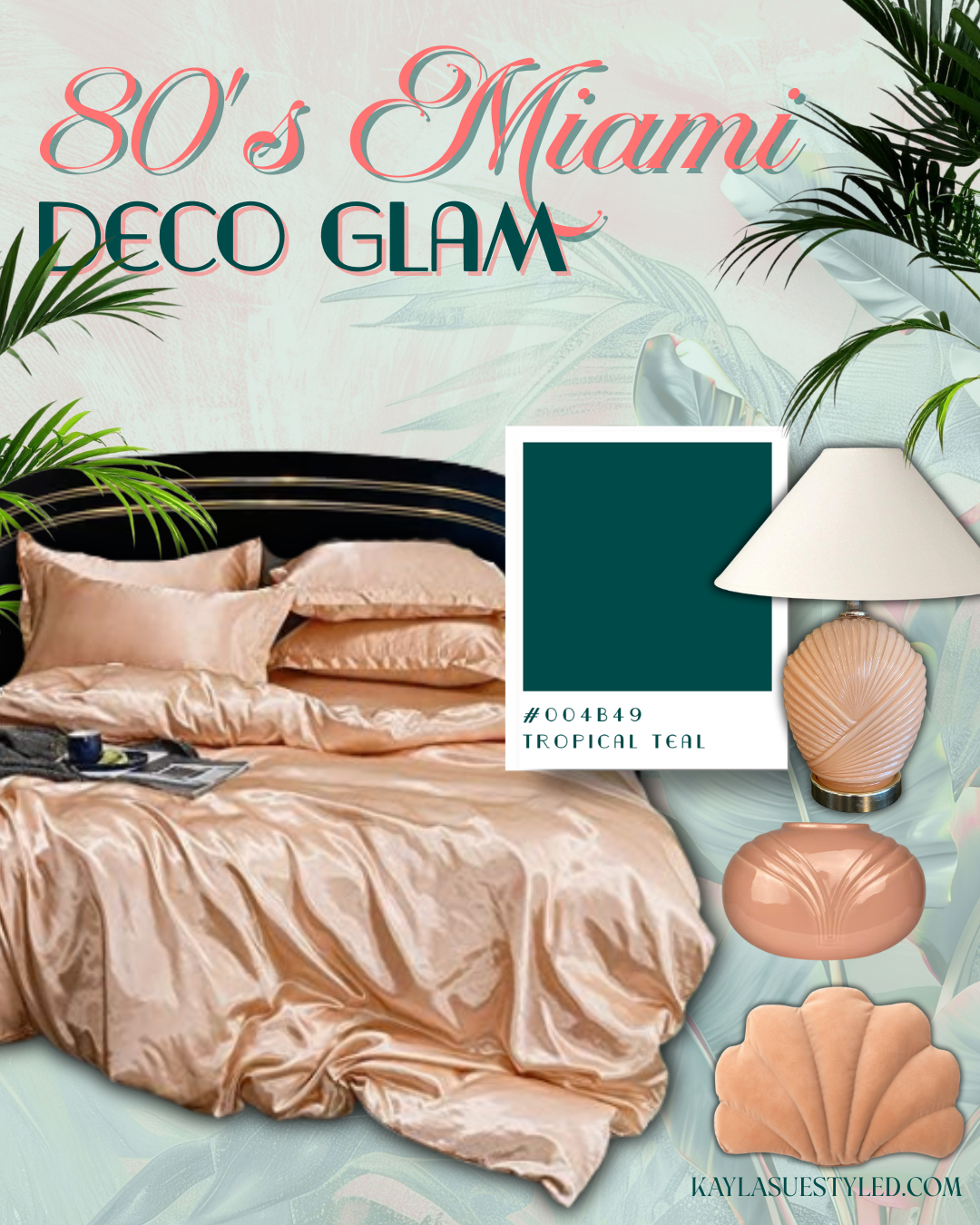
80’s Miami Art Deco Glam Bedroom Moodboard
To get find these and similar vintage items on places like FB Marketplace & Etsy, here are some helpful keywords.
Headboard: Lane Furniture, 80’s Lacquered Headboard, Italian Lacquer Furniture, Lamanite Vintage Headboard
Lamp: Anchor Hocking Shell Lamp, 80’s Scalloped Glass Shell Lamp, Ribbed Shell Lamp
Vase: Royal Haegar Pottery Vintage Art Deco Vase, Ceramic Art Deco Vase,
Pillow*: Clam Shell Vintage Pillow, Art Deco Shell Pillow
*harder to find in vintage condition, but there are plenty of inspirations online, check next image for shopping link.
In Miami Tropical Deco, I borrow from both eras: the soft pastels and curves of early Art Deco, and the high-gloss, lacquered finishes of the 80s. That contrast is what makes the aesthetic feel transportive, nostalgic, and reminiscent of old Hollywood glamour.
Up next: the Tropical and Old Florida influences that soften Miami Deco.
If Art Deco gives this aesthetic its structure, Tropical and Old Florida give it its soul. I hope you come back next week as I’ll be breaking down the palms, pastels, bamboo textures, and nostalgic references that bring warmth and color to Miami Tropical Deco. Plus how to use these elements without going theme-y.
-Kayla Sue
